
The Pharmaceutical Industry in Society
As the saying goes health is wealth.
As long as people are healthy, physically and mentally, all is well. This is the ideal situation. However, the reality is far from this. Many people, unfortunately, are struck by illnesses that are life threatening or chronically debilitating, such as infection, cancer, diabetes, arthritis, hypertension, neurological, liver or renal diseases. While some diseases are mild, many are lethal if left untreated. Some diseases like infection, cancer and cardiovascular disease kill millions every year.
Diseases can be prevented, cured and, or managed. The onset of diseases can be prevented by following a healthy diet, exercise, stress-free lifestyles, hygiene, sanitation and by vaccinations against infectious diseases and cancer. This approach has saved millions of lives. However, despite these measures, millions of people become sick due to a variety of reasons that range from economic, poverty, or sudden onset due to biological abnormalities in the body. In such cases, medical intervention is done by using available technologies to cure or control the disease and improve quality of life. Doctors treat patients using either medicines or surgery or both. Both the methods date back to millennia. Our ancestors experimented with extracts derived from flora and fauna and found that they had medicinal properties.
The pharmaceutical industry discovers, develops and markets drugs (medicines) and vaccines to treat diseases or disorders. For example, the discovery and development of antibiotics revolutionized medicine by curing many fatal infectious diseases. Since then a variety of drugs have saved or extended the lives of millions of patients suffering from diseases of the heart, lungs, kidneys, bone, gastro-intestinal tract, skin and brain. In fact, these medicines have significantly increased human life span when compared to the previous century. Yet, despite this progress, there are many diseases, including rare diseases, for which there are no effective medicines. Cancer, the emperor of all maladies, remains largely incurable due to lack of effective medicines, although remarkable progress has been made in developing novel therapies that increase the survival of cancer patients.
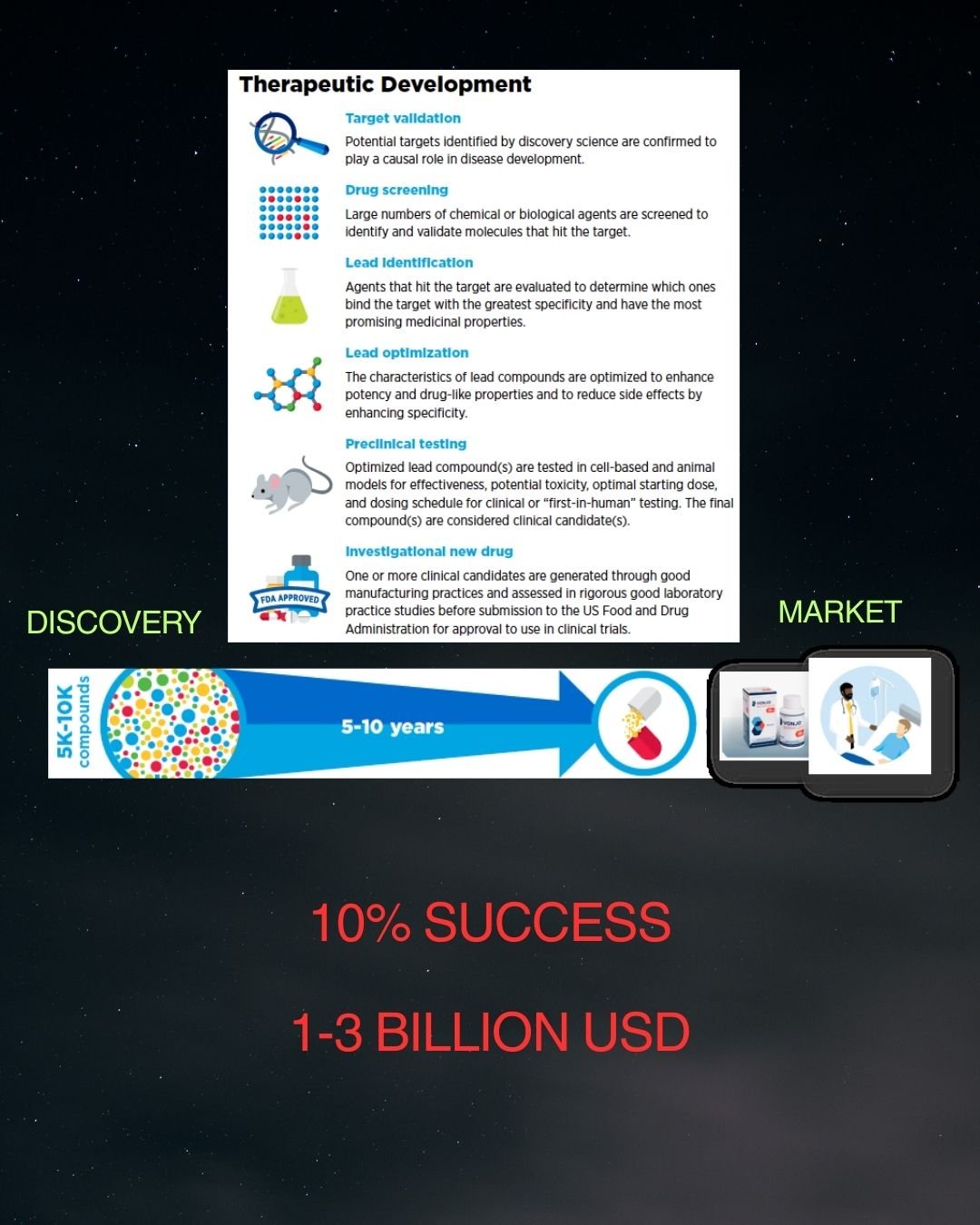
The path to discover new drugs is not easy by any stretch of imagination. The process of discovery, development and marketing a new medicine takes a long time (8-10 years) and is fraught with a high failure rate (90%) in the clinic. To add to this is the high cost ranging anywhere between one to two billion dollars to successfully develop a drug from discovery to marketing.
For reasons mentioned above, the decision to discover a new drug in any pharmaceutical company is based on two factors. 1) Clinical need: a drug is required to treat a specific population of patients suffering from a disease for which there is no effective cure or current therapies are ineffective. 2) Market: The drug must have a market to fetch returns on the investment. It makes economic sense that there should be some net profit for the company to bring critical medicines to patients as it is willing to take the high risk and invest large sums of money.
It is in this context that the purpose of a pharmaceutical company in medicine, and society in general, has to viewed.
To bring safe, effective and high-quality medicines to patients, pharmaceutical companies have to adhere to high regulatory standards of testing drug candidates in nonclinical studies (in laboratories, animal studies to demonstrate safety and efficacy), clinical studies in healthy human volunteers and patients (clinical trials 1, 2 and 3), pharmaceutical manufacturing of drug substance (active pharmaceutical ingredient) and drug product (final product like capsules, tablets, injections). If studies are not performed according to these standard guidelines (standards defined by regulatory agencies like the USFDA, EMEA, DCGI, CDSCO) the drug candidate even after completing all stages, will not receive marketing approval.
The drug discovery and development processes are multi-disciplinary involving teams from biology, chemistry, pharmacology, toxicology, patents, pharmaceutical manufacturing, formulation, clinical pharmacology, quality assurance, quality control, regulatory affairs, and marketing. The entire process is overseen by the project management team involving project leaders, finance, accounts, legal and supported by the top management.
If you are a doctor treating patients with medicines or if you happen to go the pharmacy to purchase medicines based on doctor’s prescription, spare a few seconds and think about how these medicines were discovered and developed by the pharmaceutical companies.
References:
- Wouters, J.O. et al 2020. Estimated Research and Development Investment Needed to Bring a New Medicine to Market, 2009-2018. JAMA, Volume 323, Number 9
- Kesselheim, A.S. and Avorn, J. 2013. The most transformative drugs of the past 25 years: a survey of physicians. Nature Reviews Drug Discovery Volume 12, 425
- Siddhartha Mukherjee. The Emperor of All Maladies: A Biography of Cancer. 2010.
- Daniel Vasella with Rober Slater. Magic Cancer Bullet: how a tiny orange pill is re-writing medical history. 2003. HarperCollins books
- Images: Cancer Progress Report 2025, American Association for Cancer Research
- Ramesh Jayaraman
DoseQuantics Consulting Pvt Ltd