
Polymorphisms in Drug Metabolizing Enzymes have Therapeutic Implications
Ramesh Jayaraman, Founder-Director, DoseQuantics Consulting Pvt Ltd, India
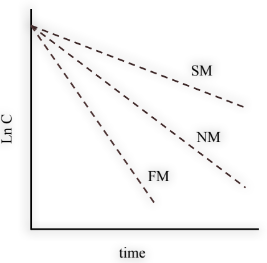
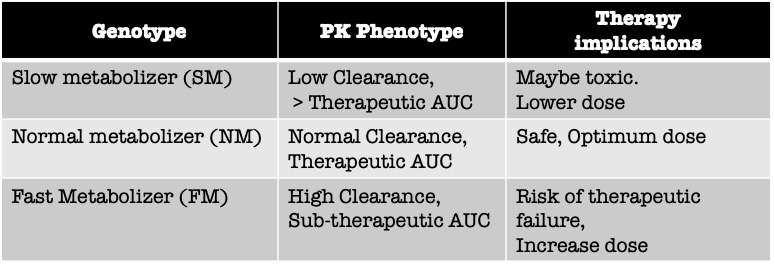
The cytochrome P450 (CYP450) family of enzymes is responsible for the metabolic clearance of a majority of small molecule drugs. Some of the major CYP450 enzymes are CYP3A, CYP2D6, CYP1A, CYP2C9, CYP2C19, CYP2B6 and CYP2E1. For many drugs a single CYP450 can be contribute to the metabolic clearance. Some of the CYP families, such as CYP2D6, show enzyme polymorphisms because of the genetic variants (alleles) in the CYP450 gene. The polymorphic enzymes demonstrate different catalytic (metabolic) rates for a drug that can lead to different systemic clearances of the drug, which in turn leads to differences in the exposures (Area under the plasma concentration time curve (AUC)). Based on the genotype/phenotype correlation, patients and healthy humans can be classified into slow metabolizers (SM), normal metabolizers (NM), and fast metabolizers (FM) for a specific drug that is metabolized by a CYP450. As the AUC is correlated quantitatively with efficacy and toxicity, the variances in AUCs influence the therapeutic outcome. The same dose given to NM, SM and FM patients can result in different outcomes. For example, the same dose in NM patients can achieve efficacy with safety, can cause toxicity in SM patients because of supra therapeutic exposures, and cause therapeutic failure in FM patients due to sub-therapeutic exposures. Genotypic analysis of the patients can help tailor the dose of the drug based on their phenotype category.
Pharmacogenetics is a discipline that studies the genetic basis for the disposition of drugs and is playing an important role in precision medicine.
In preclinical development, conducting CYP450 phenotyping studies help in identifying the CYP450 that is responsible for the major metabolism of the candidate drug. If it is found to be a CYP that is polymorphic, then it should be used to inform in dose selection in clinical trials.
References:
- Rostami-Hodjegan A and Tucker GT (2007) Simulation and prediction of in vivo drug metabolism in human populations from in vitro data. Nat Rev Drug Disc 6: 140 –148.
- Vernandes et al, 2026. Primaquine-derived 5,6-orthoquinone concentrations in urine associated with CYP2D6 genotype-predicted phenotype and blood methemoglobin levels. Antimicrob Agents Chemother 5;70(8):e0053926.