
The challenge of translating in vitro potency and efficacy to in vivo
Ramesh Jayaraman, Founder-Director, DoseQuantics Consulting Pvt Ltd, India
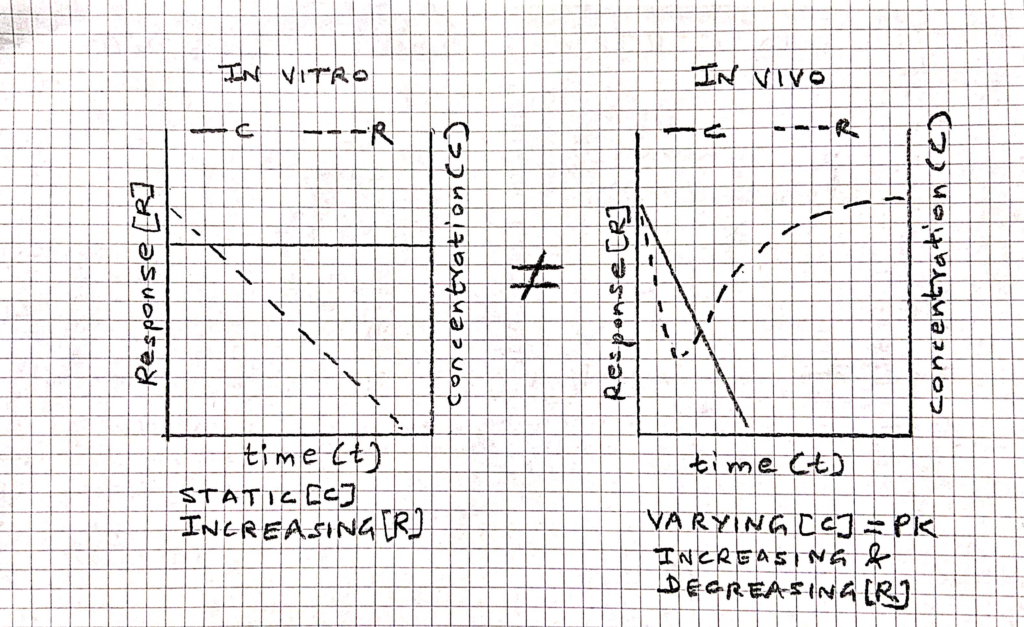
When a potent molecule is identified during the lead identification stage, it is common tendency to assume it will demonstrate efficacy in vivo. However, there is a big difference between how the potency and efficacy is measured under in vitro conditions (biochemical target assay, cell assays) and in in vivo conditions (pharmacology in a disease model).
Concentrations are static (constant) in in vitro assays and pharmacological effect is a function of time of exposure to the constant concentration. When the same molecule is dosed to animals to evaluate efficacy, its concentrations vary over time because of pharmacokinetics (absorption, distribution, metabolism, transport, elimination), due to which the pharmacological effect will also vary over time- increase and decrease in effect.
It is important to determine the relationship between varying concentrations and effect in vivo when translating in vitro measures of potency and efficacy.