
Importance of Tissue Concentrations in Anti-Infective Pharmacology
Ramesh Jayaraman, DoseQuantics Consulting
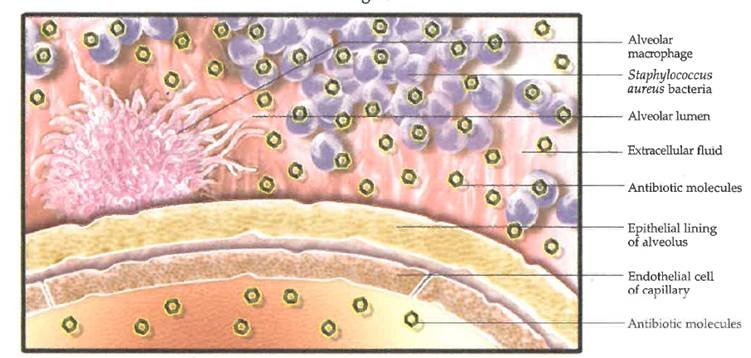
Pharmacokinetic parameters estimated in blood, serum and plasma are normally used for interpreting efficacy (pharmacodynamics) and safety of a drug and to establish pharmacokinetic/pharmacodynamic (PK/PD) relationships for identifying the optimum dose and regimen. However, ethical and methodological reasons make it difficult to measure drug concentrations in tissues. As blood or serum is relatively easy to obtain, drug concentrations in serum serve as surrogates measures for decision making for treatments and for therapeutic drug monitoring.
For many drugs the site of pharmacological action is in the tissues (e.g. anti-infective drugs). Although plasma PK exposures are used for determining efficacy, they are not always predictive of efficacy as there can be significant differences in drug exposure between blood and tissues due to drug distribution caused by drug properties and physiological barriers. Drugs always do not distribute homogeneously in tissues and can lead to sub-therapeutic unbound drug concentrations at the target sites in tissues. Therefore, it is important to measure drug concentration (free fraction of drug) in tissues predict efficacy.
In infectious diseases, most infections are localized in the interstitial regions of tissues (e.g. pulmonary infections, skin infections, CNS infections, infections in the bone, ear, eye). Estimation of drug concentrations in tissue homogenates is a method used for quantitating drug exposure in tissues and prediction of efficacy. Tissue exposures derived from tissue homogenates are quantified in terms of ug/g tissue (e.g Cmax) or ug.h/g tissue (e.g. AUC) which are then compared with the drug’s MIC or to estimate tissue to plasma ratios, and then correlated with the drug’s efficacy.
Drawing conclusions about a drug’s efficacy based on concentrations estimated in tissue homogenates can be misleading. Tissues are composed of different compartments such as extracellular space (interstitial fluids), intracellular, and capillaries supplying the tissues. Drugs may heterogeneously distribute into these compartments – interstitial fluids, bind to cell membranes and or localize in intracellular regions in cytoplasm and in organelles resulting in different bound and unbound fractions in the tissue compartments. As the unbound fraction of the drug contributes to the pharmacological action in tissue sites, concentrations from tissue homogenates do not represent the unbound fraction of drug at the site of action. When tissues are ground the architecture is destroyed and a hybrid concentration of drug is obtained due to mixing of the compartments, which in turn can result in underestimation of drug concentration in the interstitial region or in overestimation of drug in the intracellular region.
Micro Dialysis (MD) is being increasingly used, both in drug development and in the clinic, to accurately measure unbound drug concentrations in tissue compartments like interstitial fluids and inform decision making in treatment of infectious diseases.
Case study: The distribution of Moxifloxacin to tissue interstitial compartments (a site of infection for skin and skin structure) was evaluated in healthy human volunteers using MD in muscles and subcutaneous regions. The unbound concentrations of Moxifloxacin in the tissue compartments (site of infection) far exceeded its MIC90 on critical bacterial pathogens which correlated with its efficacy against the pathogens, and also supported the surrogate exposures derived from serum. Importantly, the ratio of exposures in the interstitial compartments relative to plasma was approximately 0.5, which was in contrast to the ratio of > 1.0 obtained by the homogenate method.
In summary, estimating drug concentrations in tissues by the tissue homogenization method is inappropriate and misleading, and should be avoided in anti-infective drug discovery programs for interpreting exposure – efficacy relationships.
References:
- Müller M, dela Peña A, Derendorf H. 2004. Issues in pharmacokinetics and pharmacodynamics of anti-infective agents: distribution in tissue. Antimicrob Agents Chemother. 48(5):1441-53.
- Müller M, Stass H, Brunner M, Möller JG, Lackner E, Eichler HG. 1999. Penetration of moxifloxacin into peripheral compartments in humans. Antimicrob Agents Chemother. 43(10):2345-9.